

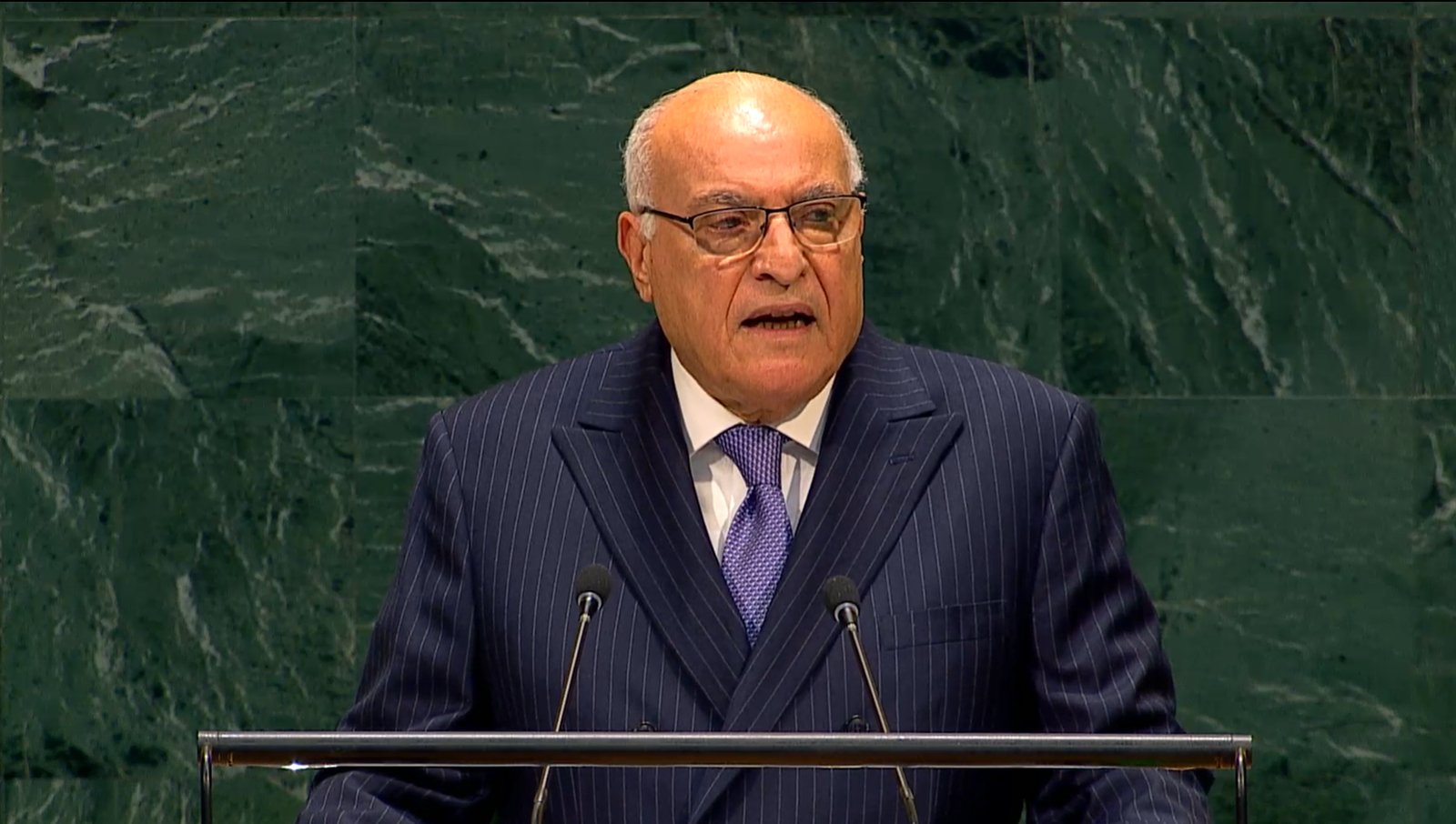
Ahmed Attaf, Minister for Foreign Affairs, National Community Abroad and African Affairs of Algeria, warned that international law is being applied selectively, “subject only to the dictates of power balances”. He asked: “What confidence can remain in international law, when the aggressor is granted the right to self-defence, while the victim is required to justify even the right to survive?”
“We cannot speak of international justice without addressing the historical imbalances that still mar the structure of international decision-making,” he stressed. In that context, he urged “profound reform of the Security Council”, as “correcting the historical injustice suffered by Africa requires permanent and fair African representation” with “full powers”.
Turning to the Middle East, he said the Gulf and wider region are experiencing “one of the most dangerous periods in their history”. The Israeli occupation continues to kill Palestinian civilians, including women and children, “in a scene that should never become a normalized part of the world’s daily reality”, he stressed. Algeria, he said, remains committed to the Palestinian people’s rights, “foremost among them” the right to establish an independent, sovereign State.
On Western Sahara, he reaffirmed Algeria’s support for the Sahrawi people’s right to self-determination and welcomed direct negotiations between Morocco and the Polisario Front. Any “serious negotiating process”, he said, must respect UN resolutions and the Organization’s “long-standing doctrine on decolonization”.
Attempts to bypass that framework, he warned, would “further complicate” the conflict and “exacerbate tensions”. He called for a “comprehensive political process” allowing the people of Western Sahara to exercise their “inherent right to self-determination”, describing this as the proper approach to resolving the status of “the last colony on the African continent”.